Search results: 33

Asthma Management for child care providers is Respiratory Health Association's free training for caregivers of young children with documented or presumed asthma. In this training, RHA educated child care providers on how to best care for a child living with asthma.
Topics include:
- Identifying a child having trouble with asthma
- Early asthma warning signs
- Trigger avoidance strategies
- Asthma medication policies
- Asthma emergency response in a child care setting
Contact Hours: 2 hours Gateways Content Area: HSW (2 hours) CDA Content Area: 1 (2 hours)
Esta capacitación está disponible en español aquí.

In this training, participants will define developmentally appropriate practice (DAP) as well as recognize the importance of DAP when caring for mixed-ages of children. Components of a safe and healthy family child care environment serving mixed-ages of children will be discussed as well as identifying areas for program improvement. This Registry-Approved training is brought to you by Gateways to Opportunity. This training is ExceleRate-approved and counts towards ExceleRate™ Illinois for licensed child care centers and DCFS licensed program training hours.
Contact Hours: 3.5 hours Gateways Content Areas: HSW (1.5 hours); CPD (2 hours) CDA Content Areas: 1 (1.5 hours); 5 (2 hours)
Esta capacitación está disponible en español aquí.

This training will provide participants an overview of child development, health, and safety issues for children birth through early school-age. Emphasis will be on understanding patterns of development, developmental domains, and the role of nutrition in development. In addition, health and safety issues will address supporting the growth of healthy children - from the basics such as handwashing to more in-depth practices surrounding healthy procedures and disease prevention. Participants will learn more about emergency planning/preparedness and first aid as well as identify tips for maintaining safe indoor/outdoor environments.
This training covers the DCFS Training Topic:
Anaphylactic Shock, as referenced in Regulation Child Care Act 5.11. Completion
of this training satisfies that requirement.
Contact Hours: 3 hours Gateways Content Areas: HGD (1.5 hrs) HSW (1.5 hrs) CDA Content Areas: 1 (1.5 hrs) 8 (1.5 hrs)
Esta capacitación está disponible en español aquí.
In this training, Creating Your Family Child Care Routines and Schedules, participants will learn to describe the importance of routines and schedules in a family child care program, identify essential components of effective routines and schedules, and create sample routines and schedules that will support healthy development, learning, and well-being in a family child care program. **Taking this training will not earn you a Family Child Care Credential. That process involves working with a Credentials Counselor.**
Topics include:
- Importance of Routines and Schedules
- Balancing Needs
- Developing Effective Schedules
- Daily Routines
- Transitions

Module 1 - Child Development Overview: Understanding How Young Children Grow and Develop
In this module, you will receive an overview of child development for children birth through early school age. Emphasis will be on understanding basic milestones in development as well as on strategies used to promote the healthy development of children.
Contact Hours: 2 hours Gateways Content Areas: HGD (2 hours) CDA Content Areas: HS (1 hour); CD (1 hour)Esta capacitación está disponible en español aquí.

Module 2a - Health Issues for Group Care
Ensuring a child's health and well-being requires more than basic first aid and emergency contacts. In this module, you will learn how to help the growth of healthy children -- from the basics like hand washing to a more in-depth look at various practices surrounding health care.
This Module (2a) covers the DCFS Training Topic:
Anaphylactic Shock, as referenced in Regulation Child Care Act 5.11. Completion
of this Module along with Module 2b satisfies that requirement.
Esta capacitación está disponible en español aquí.

Module 2b - Nutrition Issues for Group Care
Whether you're responsible for providing a quick snack or a well-balanced meal, understanding children's dietary needs creates healthier and happier kids. Learn the basics of good nutrition, food safety and various practices surrounding nutrition through this module.
This Module (2b) covers the DCFS Training Topic:
Anaphylactic Shock, as referenced in Regulation Child Care Act 5.11. Completion
of this Module along with Module 2a satisfies that requirement.
Esta capacitación está disponible en español aquí.

Module 1 - Child Development Overview: Understanding How Young Children Grow and Develop
In this module, you will receive an overview of child development for children birth through early school age. Emphasis will be on understanding basic milestones in development as well as on strategies used to promote the healthy development of children.
Contact Hours: 2 hours Gateways Content Areas: HGD (2 hours) CDA Content Areas: 1 (1 hour); 8 (1 hour)Module 2a - Health Issues for Group Care
Ensuring a child's health and well-being requires more than basic first aid and emergency contacts. In this module, you will learn how to help the growth of healthy children -- from the basics like hand washing to a more in-depth look at various practices surrounding health care.
Contact Hours: 2 hours Gateways Content Areas: HSW (2 hours) CDA Content Areas: 1 (2 hours)Module 2b - Nutrition Issues for Group Care
Whether you're responsible for providing a quick snack or a well-balanced meal, understanding children's dietary needs creates healthier and happier kids. Learn the basics of good nutrition, food safety and various practices surrounding nutrition through this module.
Contact Hours: 2 hours Gateways Content Areas: HSW (2 hours) CDA Content Areas: 1 (2 hours)In this training, Foundations of Family Child Care Business Operations, participants will learn to describe and identify compliance requirements related to the Illinois Department of Children and Family Services (IDCFS) licensing standards for day care homes and group day care homes, identify where to locate essential health and safety requirements for family child care operation, and identify and communicate emergency and disaster preparedness plans and training requirements for family child care providers. **Taking this training will not earn you a Family Child Care Credential. That process involves working with a Credentials Counselor.**
Topics include:
- Licensing Considerations
- Training Requirements
- Insurance Considerations
- Health and Safety Requirements
- Emergency Plan Development
Contact Hours: 2 hours Gateways Content Area: CPD (2 hours) CDA Content Area: Program Management (2 hours)

Healthy Starts: Understanding Childhood Chronic Disease will introduce you to the issue of chronic disease, how and why chronic diseases affect young children, and how you can help prevent chronic diseases by supporting children's healthy eating and physical activity habits. We will explore topics such as childhood obesity, healthy inequity, and food deserts. This training is supported in part with funding from the Centers for Disease Control and Prevention.
Contact Hours: 1 Gateways Content Areas: HSW (1 hour) CDA Hours: 1 (1 hour)
Esta capacitación está disponible en español aquí.
This course is part of a larger series of sessions that combine to make up the Orientation to the Illinois Model of Infant/Early Childhood Mental Health Consultation (IECMHC). There are four sections to this course that must be complete prior to the start of the live zoom sessions:
- Vignette Assessment (assesses the familiarity with the competencies in the Illinois Model of I/ECMHC and an individual plan on how to increase knowledge of those competencies)
- Introduction to the Illinois Model of I/ECMHC
- Introduction to the Pyramid Model
- Community Systems Partnerships & Early Childhood Systems.
It is estimated to take approximately 3-4 hours to complete this online course.
All portions of the Orientation to the Illinois Model must be finished (this online course and all live Zoom sessions) for full credit of completion to be given.
Contact Hours: 4 hours Gateways Content Areas: PPD (4 hours) CDA Content Areas: PRO(4)

Welcome to "Infant/Early Childhood Mental Health Consultation: A Guide for Illinois Programs". This training will present an overview of the purpose and role of an Infant/Early Childhood Mental Health Consultant in Illinois child care settings. Participants will be introduced to the different types of consultation and the benefits of adding consultation to their program. Participants will also learn how to access consultation services by using available funding and resources.
Contact Hours: 1 Gateways Content Areas: Family and Community Relationships - FCR (1 hour) CDA Hours: 6 Professionalism (1 hour)

Introduction to the Child and Adult Care Food Program (CACFP) is a training made specifically for family and group home day care providers. The CACFP is an important program that helps ensure children are eating nutritious foods and developing habits to support lifelong nutrition. This training consists of three modules. Module 1 will go over the basics of the program: the “who, what, when, where, why and how.” Module 2 will cover how to get involved in the program and what you can expect when you start participating. Module 3 is all about how to get the maximum benefits out of participating. Participants will have access to helpful resources and links to support their participation in the food program.
This training was developed by the Illinois Public Health Institute with support from the Centers for Disease Control & Prevention and Illinois Department of Public Health.

A Systems Framework: Understanding the Process of I/ECMH Consultation
This module addresses the systems that I/ECMHC interfaces with. Participants will learn about system’s perspectives generally and begin to understand the settings that I/ECMH consultants work within, both formal and informal. The module explores how learning and change take place and supports consultants toward understanding their role and their relationships as change agents toward better child and family outcomes within a systems context.
Contact Hours: 2 Hours Gateways Content Area: PPD (2hours) CDA Hours: 6(2 hours)

Attachment Theory: Recognizing
Patterns and Behaviors
This module will introduce the learner to attachment theory and its history. Attachment patterns and how they are assessed will be reviewed. The learner will have the opportunity to observe children with both secure and insecure patterns of attachment through video recordings. Characteristics of infants and young children with each of the four primary attachment patterns will be described as well as characteristics of caregivers of children in the four primary attachment categories.
Contact Hours: 3 Hours Gateways Content Area: Personal and Professional Development (2 hours) and Observation and Assessment (1 hour) CDA Hours: 6- Professionalism (2 hours) and 7-Observing/Recording Behavior (1 hour)

Diversity, Equity, Inclusion, and Belonging Considerations
This module is an extension of the Diversity, Equity, and Inclusion module of the Infant/Early Childhood Mental Health Consultant orientation and to further explore Competency 3 of the IL Model of I/ECMHC, an Ability to Work Effectively Throughout Diverse Cultures and Communities. This module will investigate what diversity, equity, inclusion, and belonging (DEIB) mean for the I/ECMHC and how to put these considerations into practice. This module places a heavy emphasis on self-reflection and journaling.
Contact Hours: 3 Hours Gateways Content Area: PPD (3 hours) CDA Hours: 6(3 hours)

Exploring the Types of I/ECMH Consultation
This module will introduce the learner to the key types of infant/early childhood mental health consultation services and the various settings and contexts to which they apply. The learner will gain strategies for discerning the level and type of service appropriate for specific referrals for I/ECMHC in different settings to be most effective. The learner will have the opportunity to look at consultation through a varying lens of services by observing a child/classroom setting through video recording.
Contact Hours: 2 Hours Gateways Content Area: PPD (2hours) CDA Hours: 6(2 hours)

Infant and Early Childhood Mental Health Consultant’s Way of Being
The “Infant and Early Childhood Mental Health Consultant’s
Way of Being” training offers an individual instruction in providing
consultation to early childhood professionals in home visiting, center-based,
family child care homes, and school-based early childhood programs. This training describes the set of competencies
required by I/ECMH Consultants that are based on Georgetown University’s Center
of Excellence for Infant and Early Childhood Mental Health Consultation. Participants will also explore the Consultative Stance adopted for use by
I/ECMH Consultants using the Illinois Model for Consultation.

Supporting Teachers in Consultation by Mastering Principles of Adult Learning Theory
Designed to introduce an understanding of the Principles of Adult Learning in the I/ECMH Consultant’s role. Because adult learners receive information differently, it is important to understand what is required when working with them in consultation. Consultants in this training will build a foundation for their work with teachers by exploring the various types of learning theories and discovering strategies for their use. Information learned in this training will assist the consultant in supporting teachers’ goals of enhancing children’s social, emotional, and mental development by enhancing the social, emotional, and mental climate of their classroom.
Contact Hours: 2 Hours Gateways Content Area: PPD (2hours) CDA Hours: 6(2 hours)Supporting the Stressed-Out Early Educator: Managing Stress and Children’s Behaviors in the Early Education Setting
This training is designed for Illinois Infant/Early Childhood Mental Health Consultants wishing to deepen their understanding of stress and how it impacts the early educator and the children that they serve. In addition, participants will explore the importance of having a trauma-informed and relationship-focused approach when managing children’s behaviors often associated with stress or adding to the stress that educators experience. Participants will utilize reflective practice as a means to explore these topics and will require participants to challenge their current perspectives on challenging classroom behaviors.
Contact Hours: 2 Hours Gateways Content Area: PPD (2hours) CDA Hours: 6(2 hours)
The Role of the Infant and Early Childhood Mental Health Professional
This module will discuss the services
offered by infant and early childhood mental health informed professionals as
well as the skills and strategies used by infant and early childhood mental
health professionals in working with infants, young children, and
families.
Contact Hours: 2 Hours Gateways Content Area: PPD (2hours) CDA Hours: 6(2 hours)

Thinking Through the Business Aspects of Infant and Early Childhood Mental Health Consultation
This training provides Infant/Early Childhood
Mental Health Consultants with information and resources to assist them in
working successfully as an independent contractor. Key concepts include the
differences between working as an agency employed consultant and providing your
services as an independent contractor. We will explore ways you can assess your
preferred style of work, specific information on the essential business aspects
of independent consulting, and ways to keep accurate records and documentation
of your work. After this training, participants will have a deeper understanding of these
key concepts and others that will help you make decisions and get started in
the work as an independent consultant in Illinois.
Contact Hours: 2 Hours Gateways Content Area: PPD (2hours) CDA Hours: 6(2 hours)
What is Infant/Early Childhood Mental Health Consultation?
This training will define Infant/Early Childhood Mental Health Consultation (/IECMHC), and explore various aspects of the history, components, and effects. This module will explain how I/ECMHC operates through a systems perspective, providing a range of services and strategies to create, strengthen, and maintain a supportive environment that enhances the social and emotional development of all infants and young children. I/ECMHC works within and across all child-serving settings (e.g., early care and education, home visiting, child welfare, child care, and at times primary care settings.)
Contact Hours: 2 Hours Gateways Content Area: PPD (2hours) CDA Hours: 6(2 hours)

Early childhood is a time when children are rapidly developing motor skills and establishing habits and behaviors around physical activity. Early Care & Education (ECE) professionals and environments play a key role in supporting active play, and nurturing a joy of movement. This PALS+ training is designed for ECE leaders, agency staff, coaches, and technical assistants. The PALS+ content explores the best practices for physical activity in ECE settings and presents strategies to increase the quality and quantity of physical activity children experience while in care. Participants take away talking points and messaging around active play.
PALS+ is made possible with funding from the Centers for Disease Control and Prevention, administered by the Illinois Public Health Institute in collaboration with partners in the Illinois Alliance to Prevent Obesity.

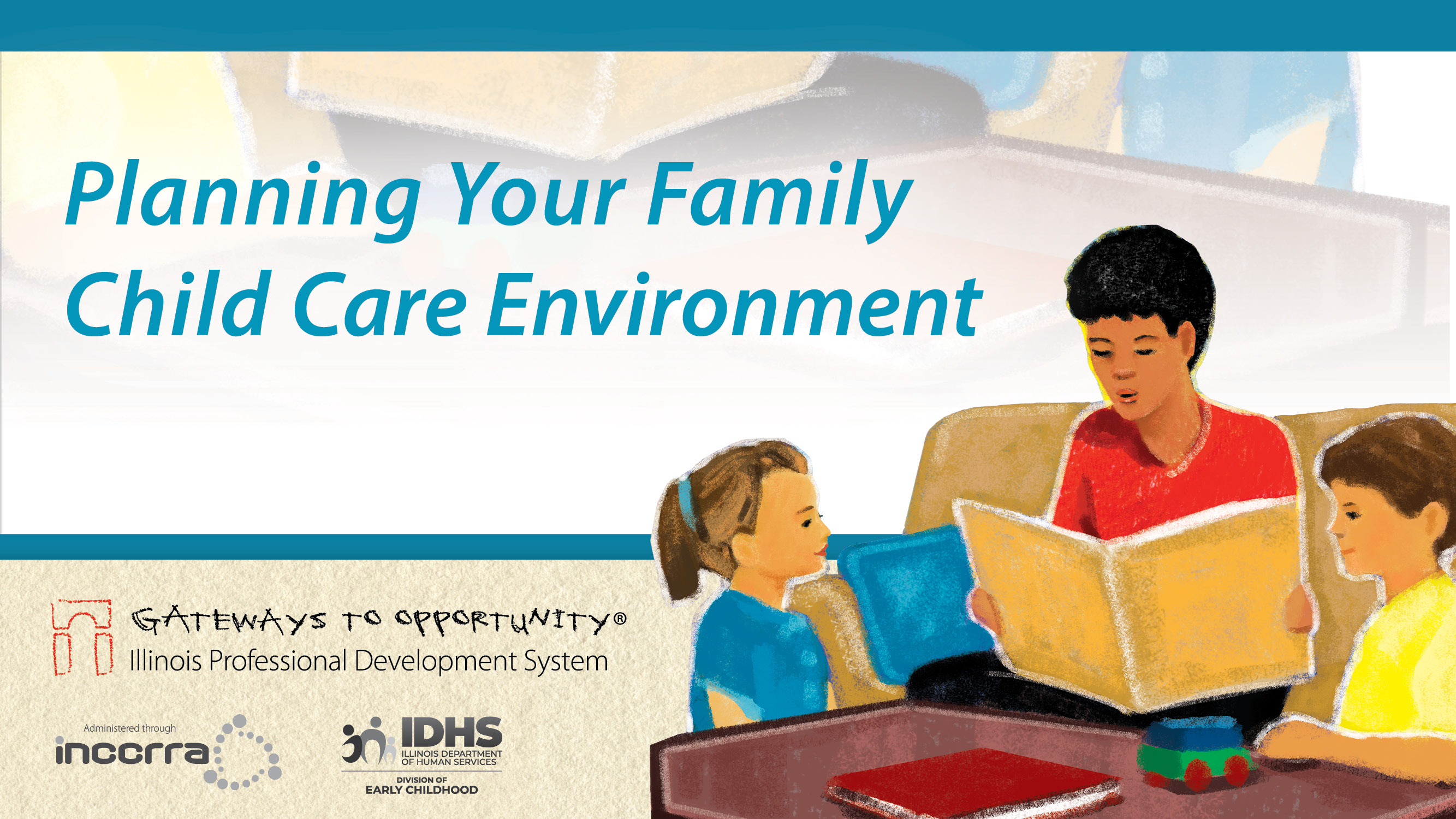
In this training, Planning Your Family Child Care Environment, participants will learn to describe and identify strategies to create a family child care environment that supports multiple uses, including: providing quality care for a mixed age group of children, managing a successful home business, and meeting the needs of their own family. **Taking this training will not earn you a Family Child Care Credential. That process involves working with a Credentials Counselor.**
Topics include:
- Foundations of effective planning
- Environmental health and safety
- Importance of the daily schedule
- Planning your outdoor learning environment
- Furniture and material selection
Contact Hours: 2 hours Gateways Content Area: CPD (2 hours) CDA Content Area: Program Management (2 hours)

Participants will review current licensing guidelines, health issues, and practices that ensure the well-being of school-age children and youth. Module 4a will also explain how overall good health support child and youth development, and identify ways to support children and youth in making healthy choices.
This module (4a) covers the DCFS Training Topic:
Anaphylactic Shock, as referenced in Regulation Child Care Act 5.11. Completion
of this module satisfies that requirement.
This course is Registry-approved and counts towards DCFS licensed program training hours (3 contact hours) for school-age and youth care.
Contact Hours: 3 hours Gateways Content Areas: HGD (3 hours) CDA Content Areas: 8 (3 hours)
Esta capacitación está disponible en español aquí.
This online training will discuss Sudden Infant Death Syndrome (SIDS), the behaviors that increase the risk of SIDS, safe sleeping habits, licensing standards, and resources to help you reduce the risk of SIDS for infants in your care.
Contact Hours: 1 hour Gateways Content Areas: HSW - Health, Safety, and Well-being (1 hour) CDA Content Areas: 1 - Health and Safety (1 hour)
Esta capacitación está disponible en español aquí.

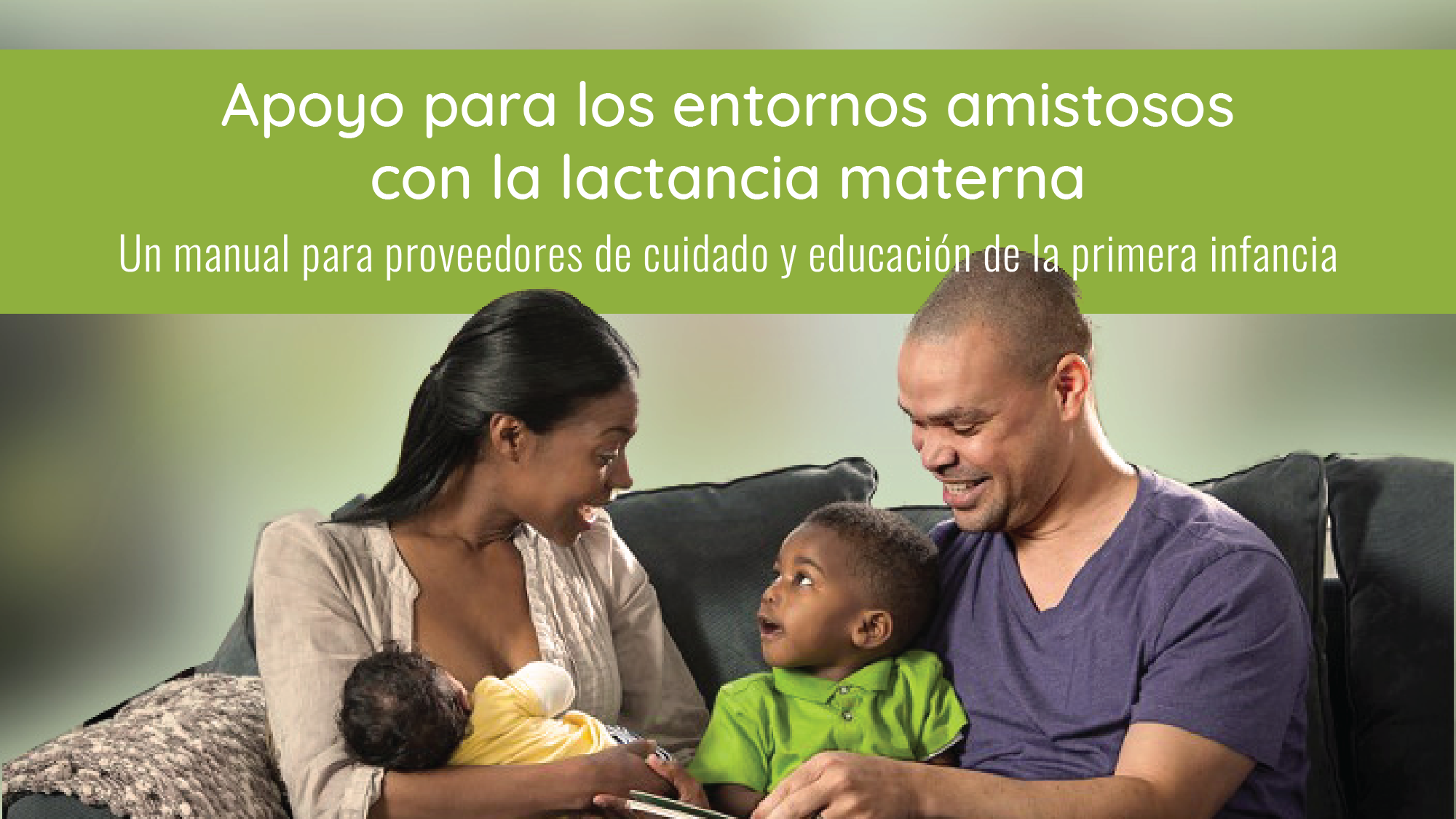
This training will help child care providers understand how to create chest/breastfeeding-friendly policies and environments that align with state and federal laws, Illinois licensing standards, and best practice. This one-hour self-paced training will cover the basics on why it’s important for childcare providers to support chest/breastfeeding, how to develop policies and spaces on site that support families, and how to equitably communicate with families about these practices. The training will include links to many tools and resources that support you in these efforts!
Developed by the Illinois Public Health Institute with support from the Centers for Disease Control & Prevention and Illinois Department of Public Health, Office of Women's Health.
Esta capacitación está disponible en español aquí.
Trauma-Informed Practice for Child Care Providers explores concepts in a variety of areas including infant/early childhood mental
health, social emotional development of young children, and trauma and adverse childhood experiences. You will look at indicators and benchmarks
and ways to foster social emotional learning in culturally
responsive ways. This training meets the DCFS requirement for trauma-informed care.
Contact Hours: 2 hours Gateways Content Areas: HSW (2 hours) CDA Content Areas: Health & Safety (1 hour) and Social/Emotional (1 hour)
Esta capacitación está disponible en español aquí.